Engineering Design
Defect assessment, review of operating conditions, and selection of a suitable repair system.
Engineering solutions for pipeline and facility repair and reinforcement
SHAREGAS provides engineering solutions for the repair and reinforcement of pipelines and industrial facilities using advanced composite systems, including carbon-fibre technologies.
Where technically suitable, these solutions can restore infrastructure affected by corrosion, wall-thickness loss, and other defects while reducing the need for section replacement and operational shutdowns.
Our services combine engineering design, repair-system selection, surface preparation, professional application, and quality control, in accordance with project requirements and applicable standards.
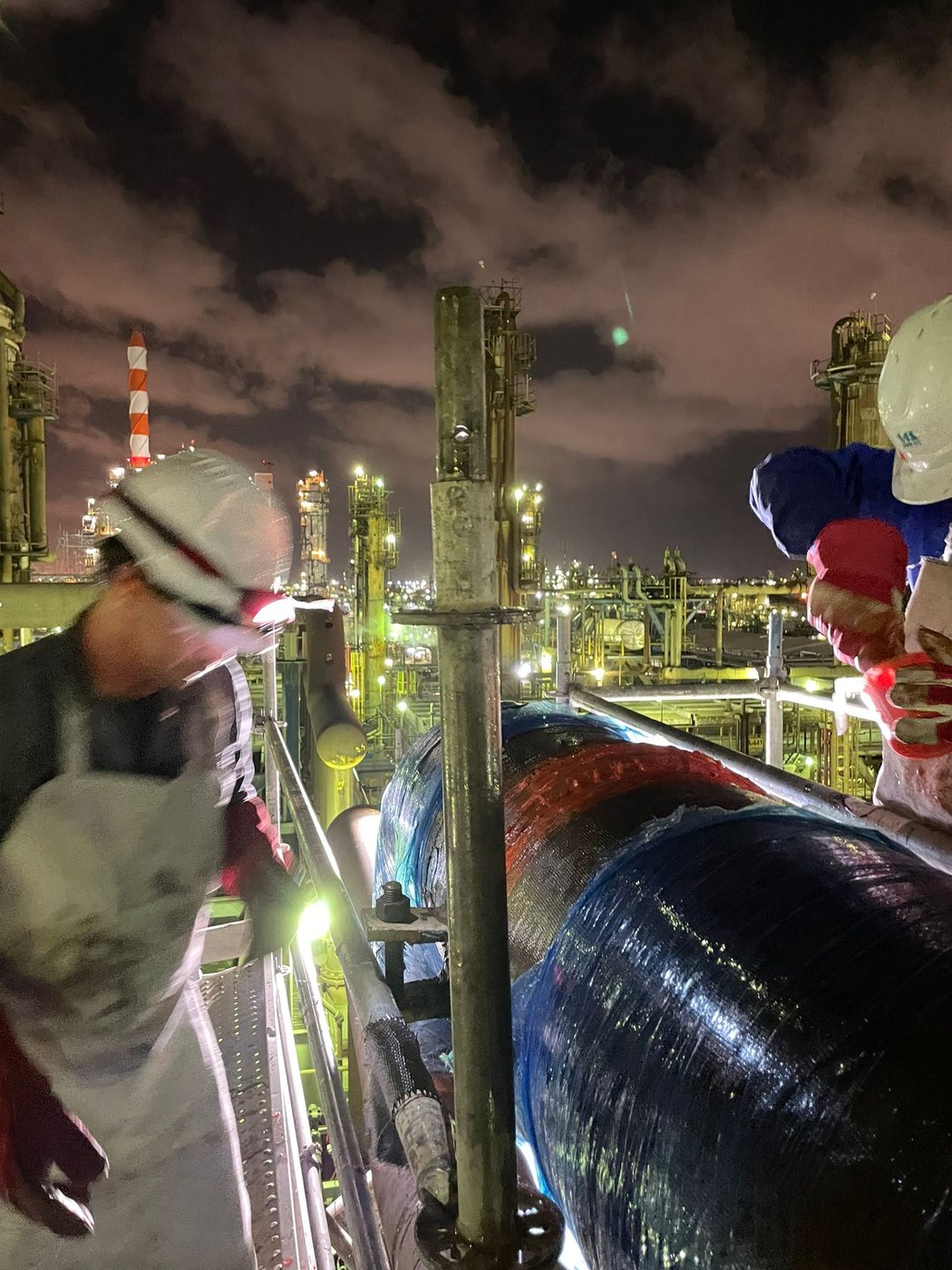
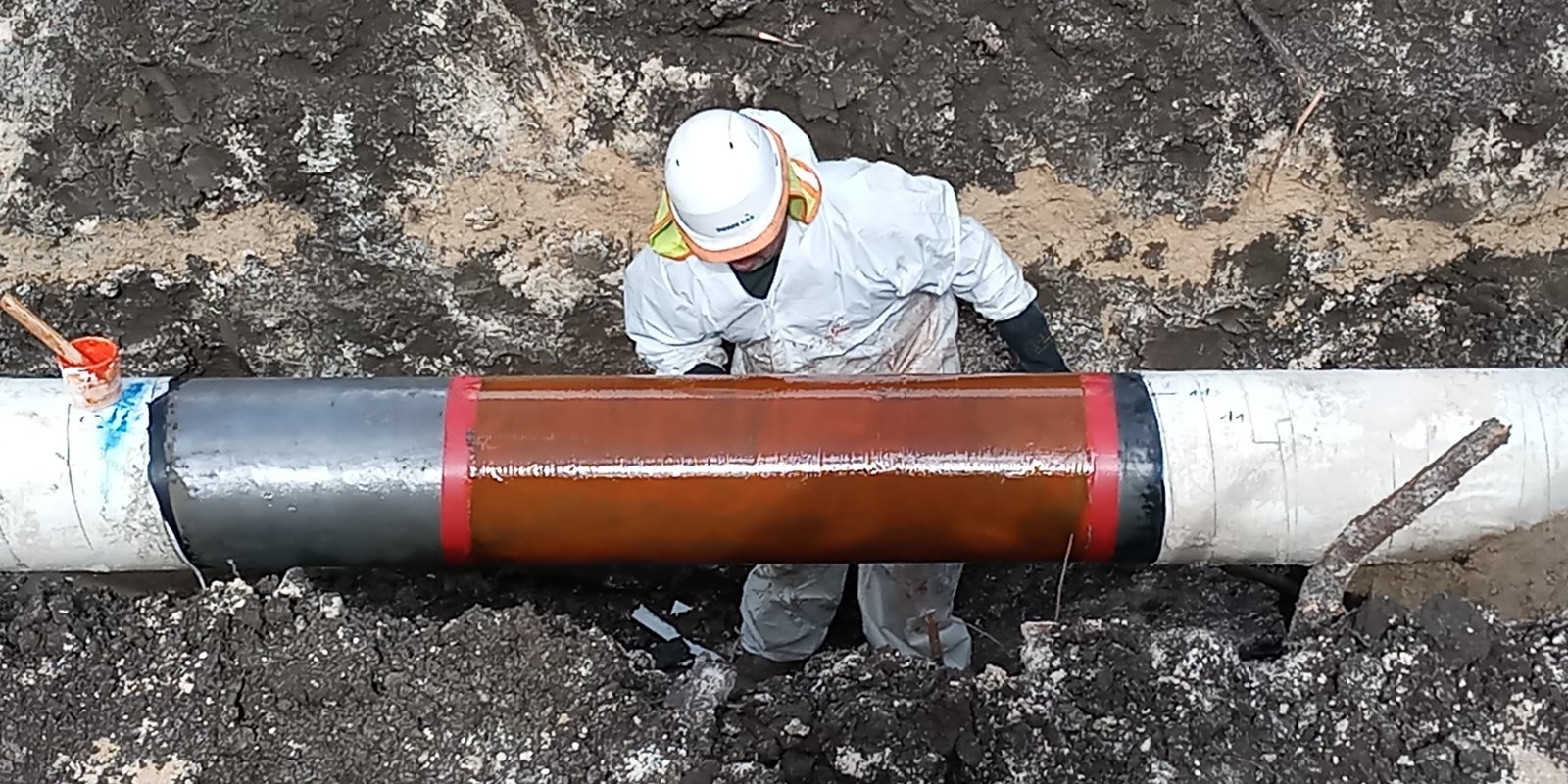
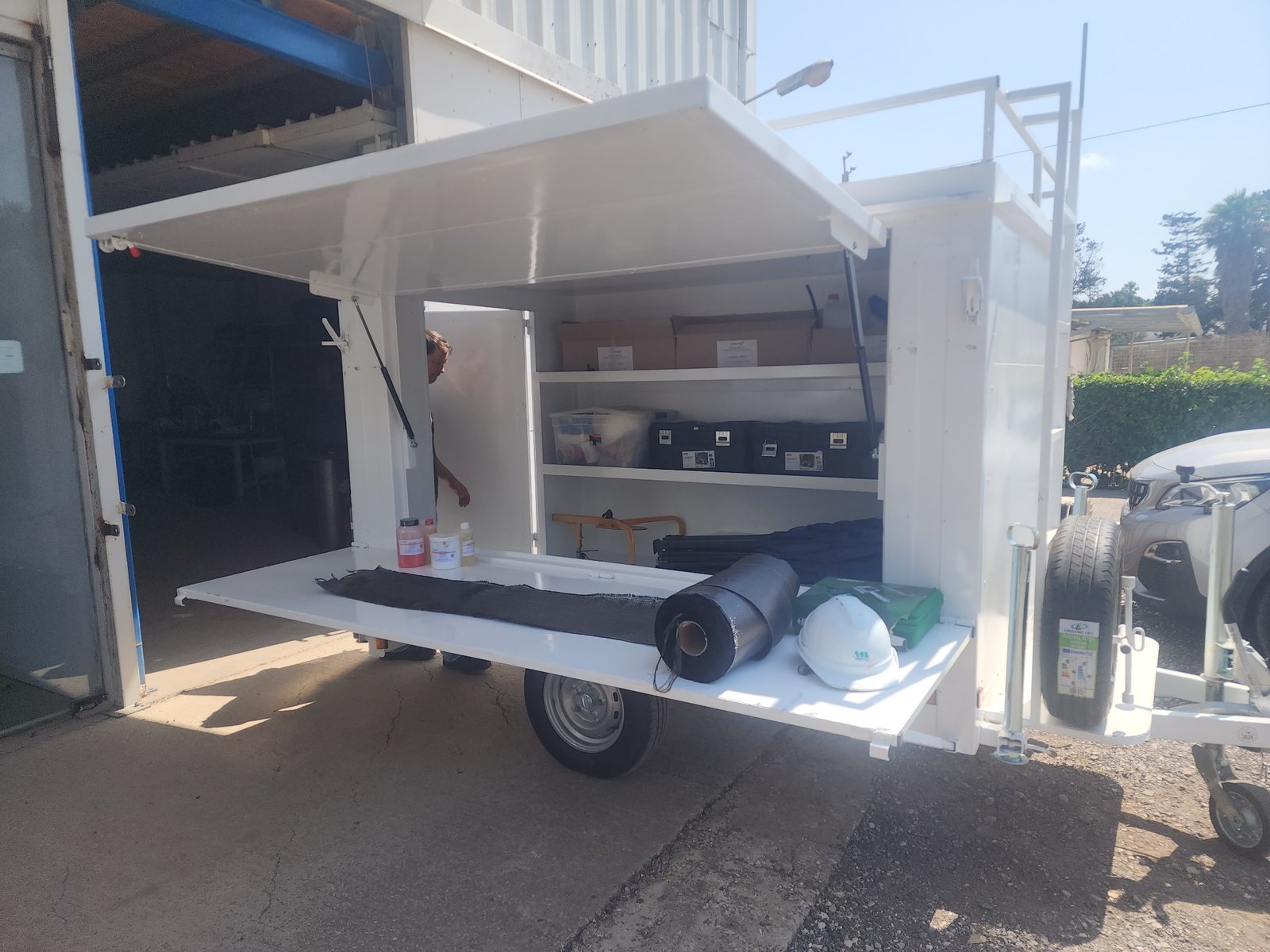
Defect assessment, review of operating conditions, and selection of a suitable repair system.
Surface preparation and repair-system installation according to the project specification.
Inspection and quality checks throughout application and completion.
Our composite repair solutions are engineered and applied in accordance with the applicable requirements of internationally recognized standards, including ASME PCC-2 and ISO 24817, as relevant to each project.
Over the years, SHAREGAS has completed many dozens of composite repairs on pipelines and industrial facilities. The following four case studies represent a small selection of our field experience, illustrating different engineering challenges, operating conditions, and repair solutions.
An intelligent pig inspection identified corrosion-related anomalies in a naphtha pipeline, including 62% wall-thickness loss. The client sought to avoid pipe-section replacement while maintaining continuous flow.
Following engineering assessment and calculations, the pipe surface was abrasive-blasted to a cleanliness level consistent with NACE 2. An epoxy primer and carbon-fibre reinforcement were applied over an 800 mm section.
The repair was completed in approximately four hours, including surface preparation and material application, without interrupting flow. Adhesive curing was subsequently checked using a Rockwell C test.
Operating pressure: 10 bar · Temperature: 35°C · Nominal wall thickness: 9.6 mm · Wall-thickness loss: 62%
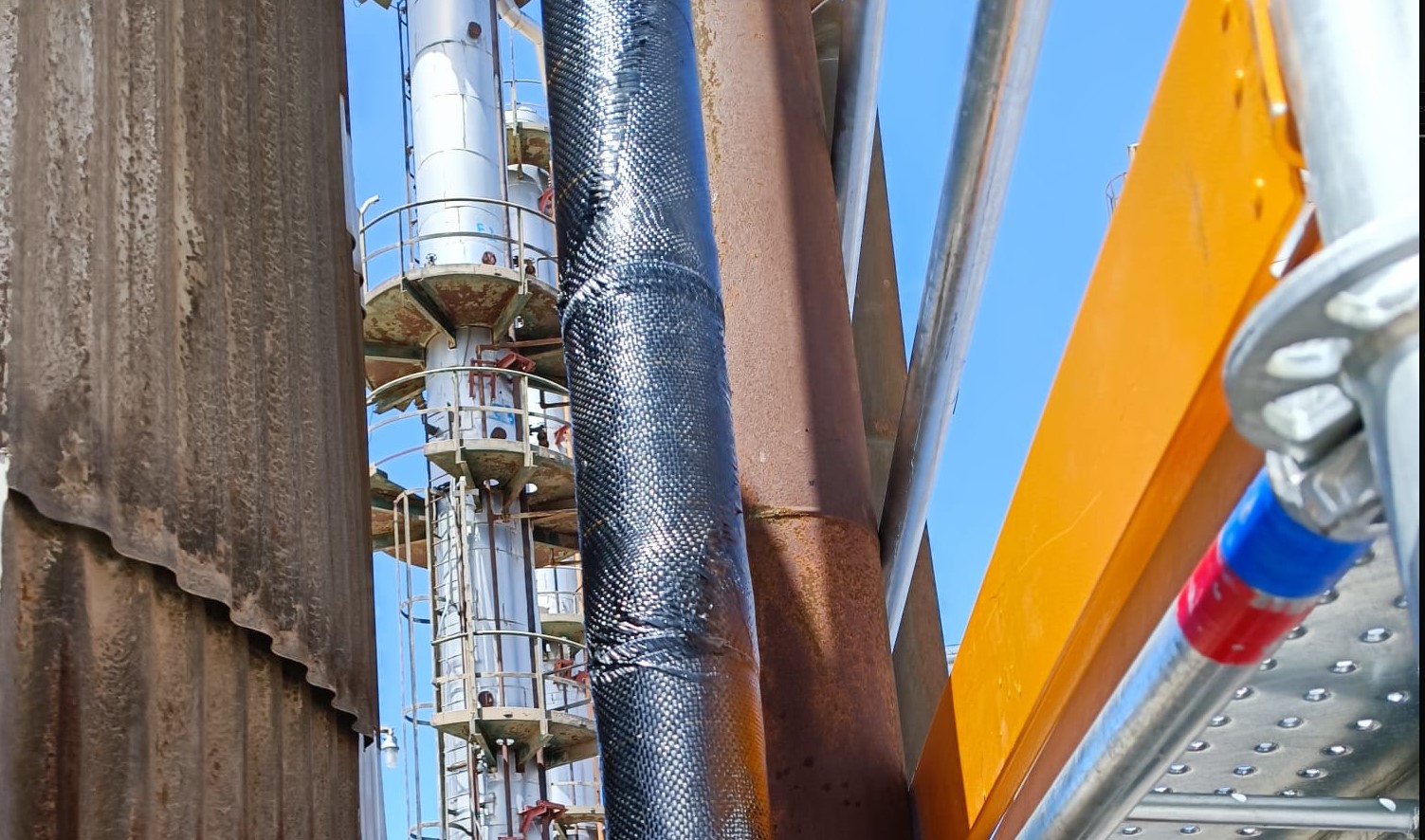
An active leak developed in a hexane pipeline at a location with complete wall-thickness loss. The client required a repair solution without cutting out and replacing the affected section.
A carbon-fibre repair system was installed without additional clamps or seals. The work included pneumatic surface preparation, surface-roughness verification, epoxy primer application, and carbon-fibre reinforcement over a 1,200 mm section.
Surface preparation and repair-system application took approximately four hours. According to the project documentation, the pipeline returned to service after approximately 24 hours, following completion of the repair and leak stoppage.
Operating pressure: 10 bar · Temperature: 120°C · Nominal wall thickness: 6 mm · Wall-thickness loss: 100%
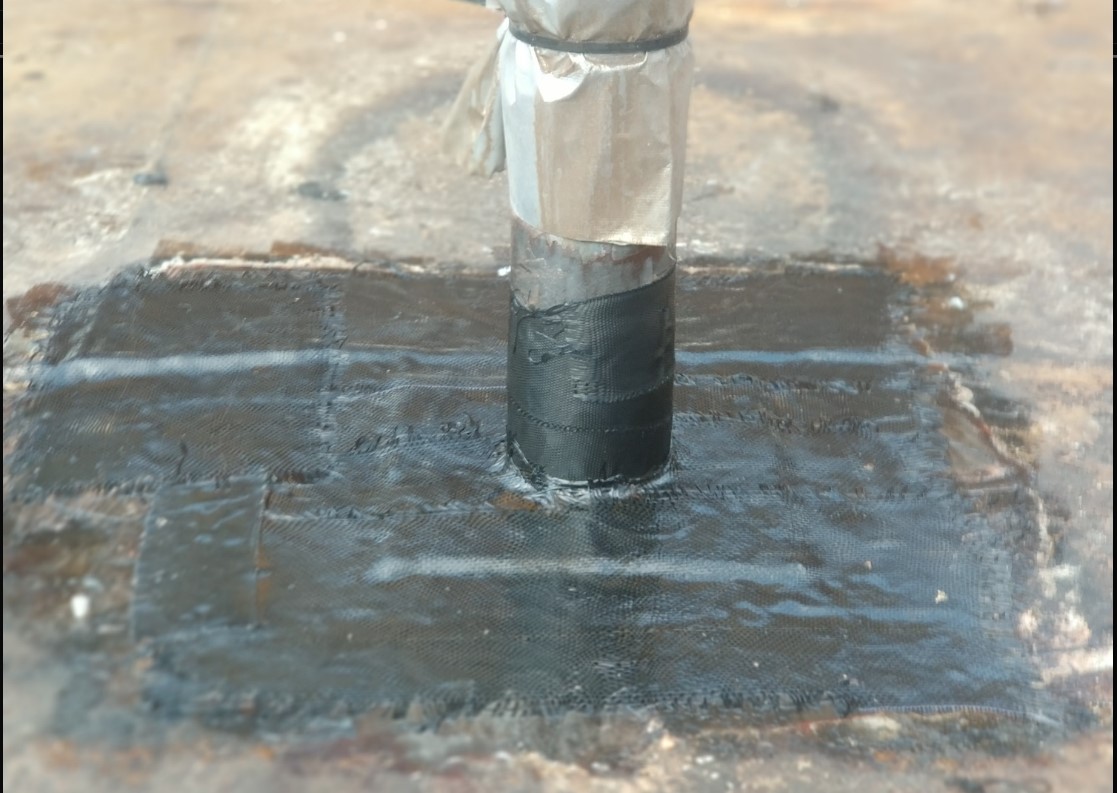
Multiple corrosion areas and active leaks were identified on the floating roof of a fuel storage tank.
Local repairs were performed using a carbon-fibre composite system to address the affected areas and leaks.
According to the project documentation, the leaks were stopped using the carbon-fibre system.
Application: Localised repair of a floating-roof fuel tank
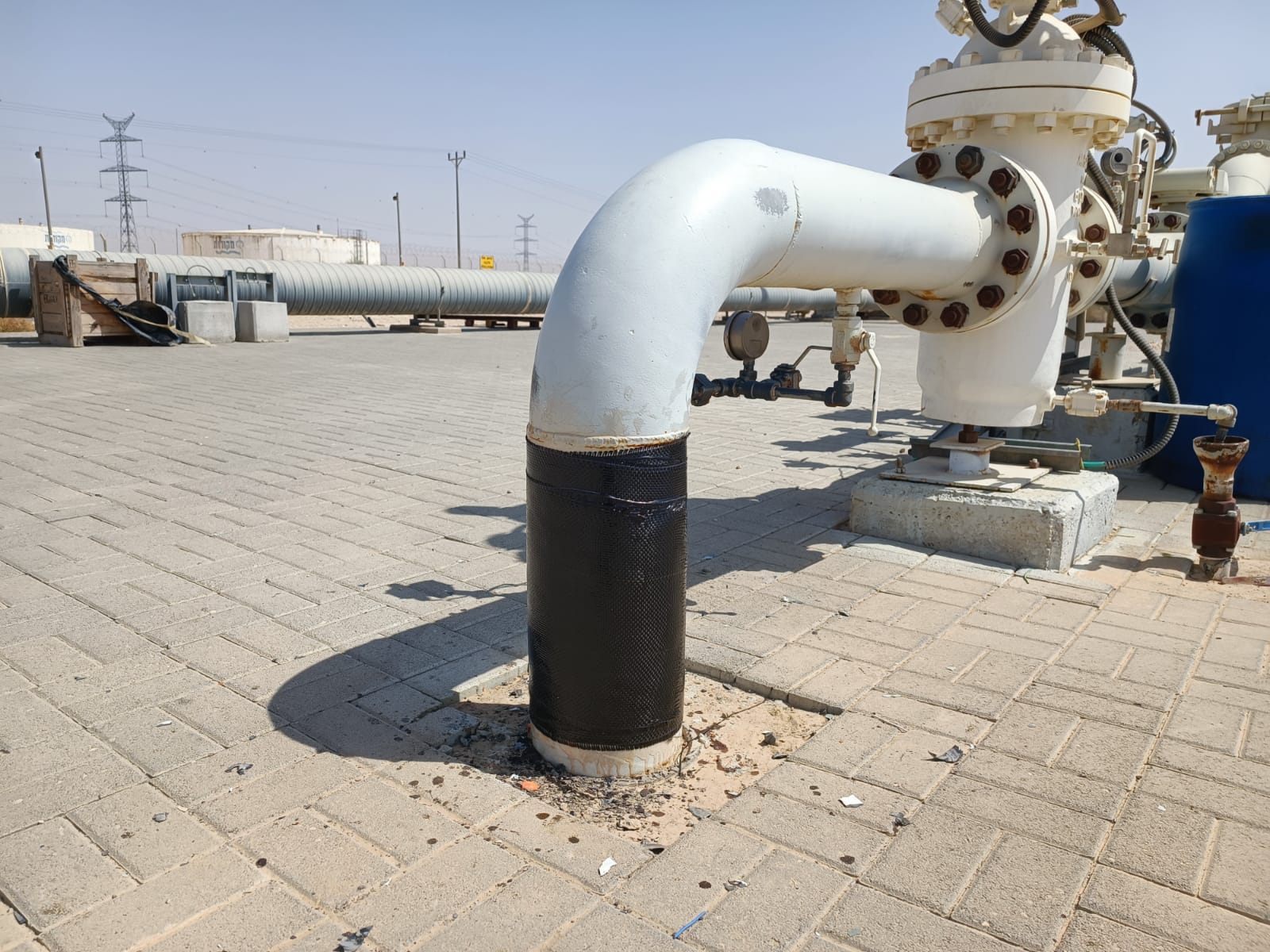
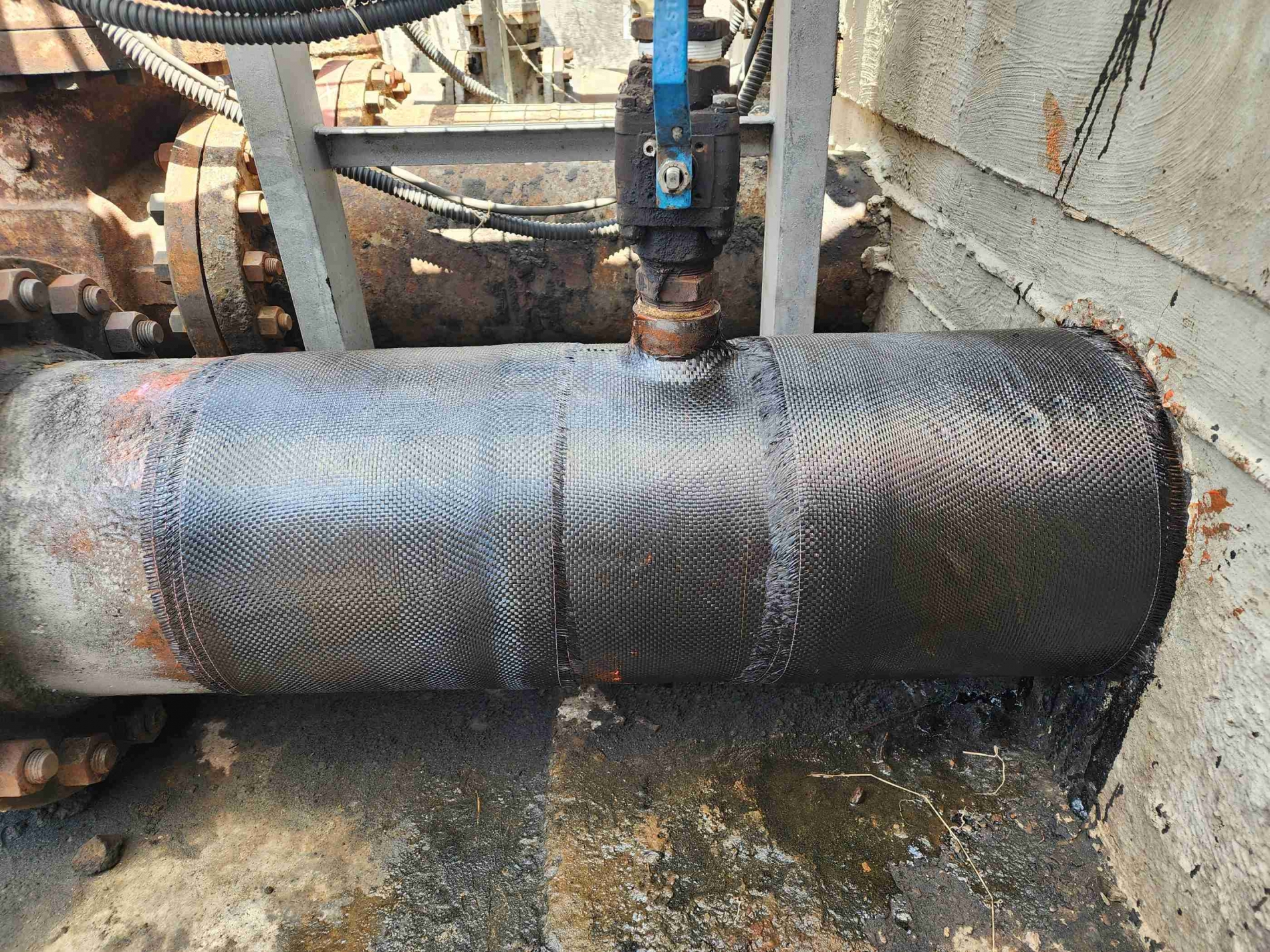
A pipeline exhibited 49% wall-thickness loss at a section transitioning below ground level.
A local carbon-fibre composite repair was performed on an operating pipeline.
The available documentation records the composite repair on the operating pipeline; the full execution details are not specified.
Key data: Wall-thickness loss 49%